Working at The Motley Fool, I absorbed the orthodoxy daily: embrace compounding, live beneath your means, and wait. Every book on my shelf reinforced the same message in slightly different packaging.
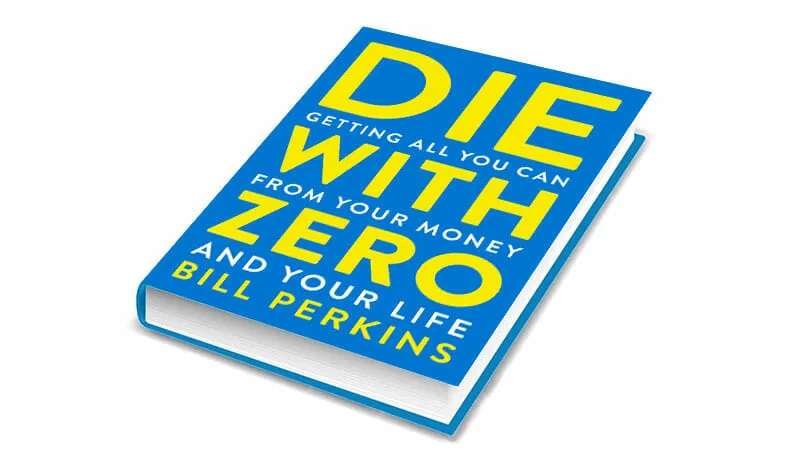
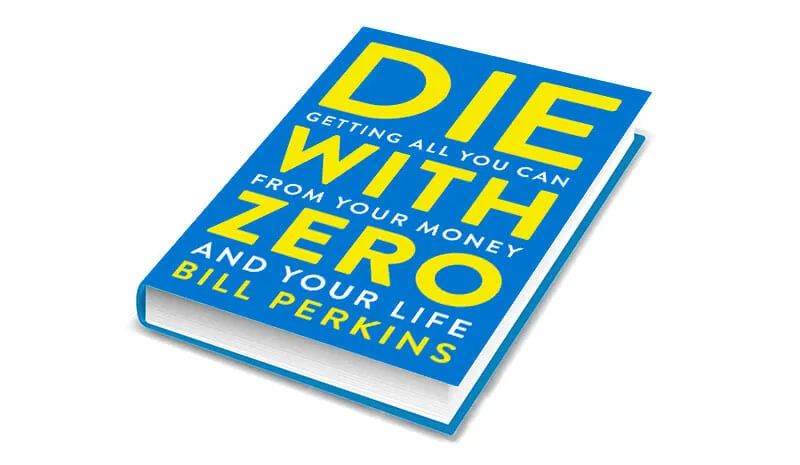
So I was genuinely thrown when I picked up Bill Perkins’ Die With Zero, which sucker-punches those platitudes and makes the case that over-saving is its own kind of failure — that the point of money is to fund experiences, and the optimal time to spend it is never when you’re dead.
I finished the book months ago. These ideas are still living rent-free in my brain.
Where Perkins won me over
The book’s strongest argument is one I instinctively knew but hadn’t fully processed: you can outgrow experiences. Backpacking through Europe and staying in hostels sounds epic at 25 and miserable at 65. Some opportunities have expiration dates that have nothing to do with money and everything to do with time, health, and stage of life. Perkins makes the case that delaying spending isn’t just conservative — it can mean missing the window entirely.
He extends this to health, and he’s right. Money isn’t the only thing that diminishes in retirement. Time accelerates, especially when health conditions narrow what’s possible. The wealth you’ve accumulated means less if your body can’t participate in spending it.
His argument that the ideal age to inherit money is between 26 and 35 also rings true. Those early adulting years are lean, early parenting is staggeringly expensive, and that’s precisely when a windfall would do the most good — both for immediate relief and for maximizing compounding if invested.
And his conclusion stuck with me most: “The business of life is the acquisition of memories. In the end, that’s all there is.” I watched my father at the end of his life, and what he held onto were the stories, the photographs, the experiences of a life well-lived. Not account balances.
Where I pushed back
Perkins argues repeatedly that leaving money behind “amounts to working for free.” I bristled every time. It’s too clean a formula. Time can be equated to money for active income, but much of what people accumulate grows passively — compounding doesn’t clock hours. More importantly, the argument ignores something I hold as a core belief: your savings can keep you from becoming a financial burden on others. That peace of mind has real value that Perkins undersells.
He also advocates spending extravagantly on peak experiences — he describes throwing a massive destination birthday party as a deliberate investment in memory-making. I understand the principle, but it’s a bridge too far for someone who’s spent decades internalizing the opposite advice. Reading about it is not the same as living it.
What stayed with me
I’m not converting to the Die With Zero philosophy. But the book moved something. It reframed saving not as an unqualified virtue but as a trade-off — one that’s worth examining honestly, especially as the years pass. The nudge I took from it is simple: I need to be more intentional about living, not just more disciplined about saving.
A good read. It earned the discomfort it caused.
Disclosures: Please do not mistake this for financial advice. These are opinions about a book I read. Those opinions are my own and do not reflect the views of my company. Best as I know, my company didn’t read this book. Best as I know, my company hasn’t read any books, because it’s a company, and companies are abstract constructs that lack the faculties and consciousness required for reading.